You’ve got a cracked windshield and a busy day ahead. The first question on your mind: how long will this take?
It’s a fair question and a quick one to answer. Most windshields are replaced in about 60 to 90 minutes. But before you drive away, there’s a cure waiting period. And if your car has modern safety cameras, ADAS calibration adds time, too.
At Cherry Glass Works, we’ve replaced hundreds of windshields right here in Scottsdale, AZ. In this guide, we’ll walk you through the entire timeline from the moment our technician arrives to when you’re safely back on the road.
How Long Does Windshield Replacement Take?
Here’s a simple breakdown to start:
| Service Type | Installation Time | Wait Before Driving | Total Time |
| Chip or crack repair | 15–45 minutes | Drive away immediately | ~30–45 min |
| Standard windshield replacement | 60–90 minutes | 1–2 hours | 2–3 hours |
| Replacement + ADAS recalibration | 60–90 minutes + 30–60 min | 1–2 hours | 2.5–4 hours |
These are general estimates. Your exact timeline depends on your vehicle, the weather, and whether your car has driver-assistance cameras. We’ll explain each factor in detail below.
What Happens During a Windshield Replacement
Understanding the process helps you plan your day better. Here’s exactly what happens when you bring your car to Cherry Glass Works or when our technician comes to you.
Step 1: Vehicle Inspection and Damage Assessment (5–10 Minutes)
Our technician first checks the damage carefully. Is it a small chip? A spreading crack? Or is the entire windshield compromised?
Not all damage needs a full replacement. Chips smaller than a quarter and cracks shorter than six inches often qualify for a quick repair. If the damage is in the driver’s direct line of sight, near the edge, or too deep, replacement is the safer call.
We also confirm we have the correct OEM or OEM-equivalent glass for your specific make and model. This step prevents delays and ensures a perfect fit.
Step 2: Vehicle and Workspace Preparation (10–15 Minutes)
Before any tools touch your car, we protect the interior. Seat covers, dashboard protection, and floor covers all go in first. The rearview mirror, windshield wipers, and any trim panels connecting to the glass are carefully removed.
This preparation step matters it prevents interior scratches and makes reinstallation faster and cleaner.
Step 3: Old Windshield Removal (15–20 Minutes)
Using a specialized cutting tool, we slice through the urethane adhesive, bonding the old windshield to the frame. The glass is lifted out carefully. Any remaining adhesive on the pinch weld is removed, and the frame is inspected for rust, cracks, or deterioration.
A clean, rust-free frame is critical. If the frame is compromised, the new windshield won’t seal properly.
Step 4: Frame Prep and Primer Application (10–15 Minutes)
The frame is cleaned thoroughly to remove all debris and old adhesive residue. A primer is then applied to the bare metal areas. Primer activates the bonding surface and helps the new urethane adhere securely.
This step should never be skipped; it’s what keeps your windshield sealed tight against wind, water, and road noise.
Step 5: New Windshield Installation (15–20 Minutes)
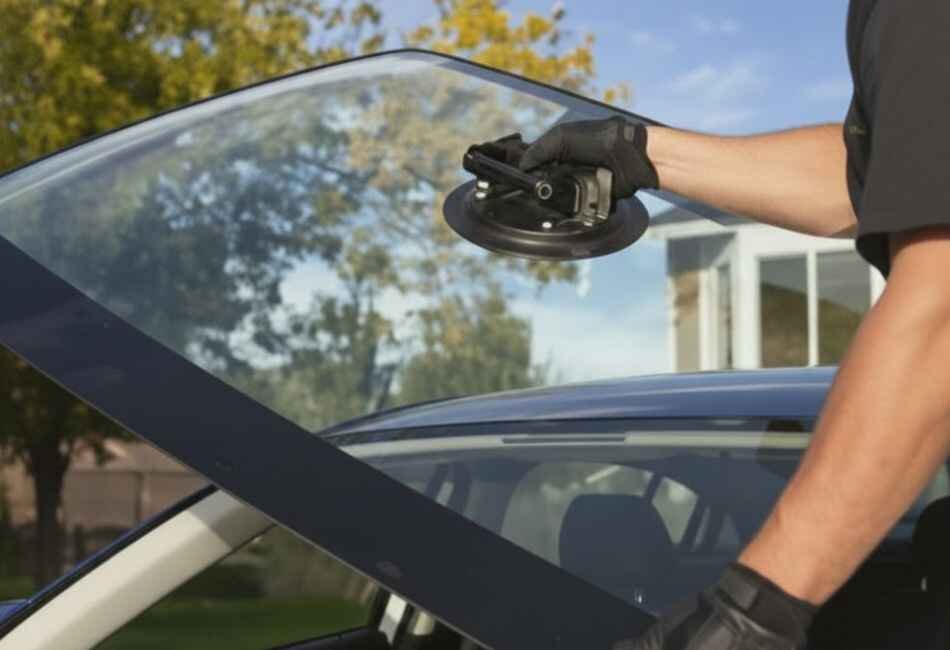
A fresh bead of high-quality urethane adhesive is applied around the full perimeter of the frame opening. The new windshield, pre-cleaned and edge-primed, is then carefully positioned and set into place.
For accuracy, two technicians often handle this step together. The glass is pressed evenly along the adhesive line with no gaps, no pressure points.
Trim panels, wipers, and the rearview mirror are reinstalled. The technician inspects the seal from inside and outside the vehicle.
Step 6: ADAS Recalibration (30–60 Minutes If Applicable)
This is the step most drivers don’t know about. If your vehicle has a forward-facing camera mounted near the windshield for lane departure warning, automatic emergency braking, adaptive cruise control, or similar systems, it needs to be recalibrated after replacement.
Why? Because even a perfect glass installation slightly changes the camera’s angle. A misalignment of just one degree can cause the system to misread lane markings by several feet at highway speed.
We’ll tell you upfront whether your vehicle requires ADAS calibration. If it does, we handle it on-site before returning your car; no second trip to a dealership is needed.
Step 7: Post-Installation Inspection and Safe Drive-Away Time
Once everything is installed and calibrated, we do a final inspection, checking the seal, glass clarity, sensor function, and overall fitment.
Then comes the most important part: waiting.
What Is Safe Drive-Away Time (SDAT)?
Safe Drive-Away Time (SDAT) is how long the urethane adhesive needs to cure before you can safely drive. Driving too soon can cause:
- The windshield to shift in the frame
- Air and water leaks at the seal
- The passenger airbag may deploy in a collision (the windshield acts as the back wall for the airbag)
- Loss of structural integrity in a rollover
Most modern fast-cure urethanes allow driving in 1 hour. Some adhesives require up to 24–48 hours for full cure. Your technician will always give you the exact SDAT based on the specific adhesive used and the weather conditions that day.
Never rush the safe drive-away time. It’s a safety standard, not a suggestion.
Factors That Affect How Long Windshield Replacement Takes
1. Your Vehicle’s Make, Model, and Year
Older, simpler vehicles are usually the fastest. A basic sedan without sensors or embedded electronics might be done in under an hour. Luxury vehicles, BMWs, Mercedes, Teslas, and Porsches often have rain sensors, heated glass, heads-up displays (HUD), and complex ADAS arrays that require extra time and precision.
SUVs and full-size trucks also take longer due to larger glass panels.
2. Whether Your Car Has ADAS
This is the biggest variable in modern windshield replacement. Vehicles manufactured after 2016 almost universally have at least one ADAS camera system. If your car has any of the following, recalibration is required:
- Lane departure warning or lane-keep assist
- Forward collision warning or automatic emergency braking
- Adaptive cruise control
- Pedestrian detection
- Heads-up display (HUD)
ADAS calibration adds 30 to 60 minutes, depending on whether static (in-shop) or dynamic (on-road) calibration is needed for your vehicle.
3. Arizona’s Heat — The Scottsdale Factor
Living in Scottsdale comes with a unique advantage: Scottsdale’s warm, dry climate actually speeds up urethane curing. Warmer temperatures help adhesives bond and cure faster than in cold or humid climates.
That said, our technicians always select the right urethane formula for Arizona’s heat. Cheaper adhesives can “heat-sag” in extreme summer temperatures, leading to wind noise and water leaks. At Cherry Glass Works, we use high-modulus urethane adhesives specifically rated for high-heat environments.
Arizona surface temperatures can swing dramatically throughout the day. Your technician accounts for ambient temperature and humidity conditions at the exact time of installation not just a general estimate.
4. Type of Glass: OEM vs. OEM-Equivalent
OEM (Original Equipment Manufacturer) glass comes from the same manufacturer as your original windshield brands like Pilkington, AGC, Fuyao, or Saint-Gobain. It matches the exact thickness, curvature, tint, UV blocking, acoustic properties, and sensor compatibility.
OEM-Equivalent (OEE) glass meets the same safety standards but may differ slightly in branding or minor specifications.
For most standard vehicles, OEE glass works perfectly. For vehicles with HUDs, embedded antennas, acoustic lamination, or complex ADAS arrays, OEM glass is the better choice.
We’ll always recommend the right glass type for your specific vehicle.
5. In-Shop vs. Mobile Service
Both options take the same amount of time for the actual installation. The difference is convenience:
In-shop service gives technicians a controlled environment with all tools at hand. Climate-controlled spaces, proper lighting, and ADAS calibration equipment are all available in one place.
Mobile service brings the technician to your home, office, or wherever you are. You skip the trip and can continue your day while we work. Scottsdale’s typically sunny weather makes mobile service reliable year-round, though heavy rain or extreme winds may require rescheduling.
How Long Does a Chip Repair Take?
If your damage qualifies for repair rather than full replacement, you’re looking at a much shorter timeline.
A chip repair typically takes 15 to 45 minutes. The technician injects a clear resin into the chip under pressure, which fills the break, bonds to the glass, and is UV-cured within minutes. You can usually drive away immediately after.
The key is acting fast. Small chips in Scottsdale’s heat and direct sunlight can spread quickly. A rock chip that costs $50–$100 to repair today can become a $300–$500 windshield replacement tomorrow.
Learn more about our auto windshield replacement and repair services to see which option fits your situation.
Can I Drive Immediately After Windshield Replacement?
No, not until the safe drive-away time is reached.
Even if the windshield looks and feels completely solid, the urethane adhesive underneath is still curing. Driving too soon, even just around the block, can compromise the seal before it fully bonds.
Here’s what to avoid in the first 24–48 hours after replacement:
- Do not slam doors: air pressure spikes inside the cabin stress uncured adhesive
- Do not go through a car wash: high-pressure water can loosen the seal
- Do not remove the retention tape: if tape was applied, leave it for at least 24 hours
- Avoid rough roads or highway speeds: vibration stresses the bonding zone
After 48 hours, treat your windshield like any other part of the car.
Does Insurance Cover Windshield Replacement in Arizona?
Here’s some great news for Arizona drivers. Under Arizona Revised Statute § 20-264, insurance companies are required to offer an optional zero-deductible glass endorsement with comprehensive coverage. If you have “full glass coverage,” your windshield replacement, including ADAS recalibration, may cost you $0 out of pocket.
Even if you’re paying out of pocket, windshield replacement is more affordable than most people expect. Give us a call at Cherry Glass Works for a free quote, and we can also help you verify your insurance coverage.
Quick-Reference Timeline Summary
Standard replacement (no ADAS):
- Inspection + prep: 15–25 minutes
- Removal: 15–20 minutes
- Frame prep + primer: 10–15 minutes
- New glass installation: 15–20 minutes
- Final inspection: 5–10 minutes
- Total installation: ~60–90 minutes
- + Safe drive-away wait: 1–2 hours
- Total time from arrival: ~2–3 hours
Replacement with ADAS recalibration:
- All of the above, plus ADAS calibration: 30–60 minutes
- Total time from arrival: ~2.5–4 hours
Frequently Asked Questions
How long does windshield replacement take at a shop vs. mobile?
The installation time is roughly the same, 60 to 90 minutes. Mobile service saves travel time but depends on outdoor conditions. In-shop service offers a controlled environment and easier access to ADAS calibration equipment.
Can I wait in my car after windshield replacement?
Yes, but keep the windows cracked slightly. This prevents pressure from building inside the cabin, which can stress the uncured urethane seal.
What if my windshield has an antenna or defroster built in?
These features add some time to installation. Rear windshields with defrosters are a common example. Your technician will handle the reconnection carefully to make sure everything works correctly.
How long does ADAS calibration take?
Typically, 30 to 60 minutes, depending on your vehicle and whether it requires static or dynamic calibration. We confirm your vehicle’s specific requirements before starting.
Does windshield replacement take all day?
No. Most customers, even those with ADAS systems, are back on the road within a few hours. The majority of jobs are completed the same morning they’re started.
How do I know if my car needs ADAS calibration?
If your vehicle was manufactured after 2016 and has any lane assistance, collision avoidance, adaptive cruise, or pedestrian detection features, it almost certainly needs ADAS recalibration after windshield replacement. When in doubt, call us, we’ll check for you.
